Local News
Bellevue reports another year of falling greenhouse gas emissions as cleaner Puget Sound Energy power and shifting transportation habits offset steady population and job growth

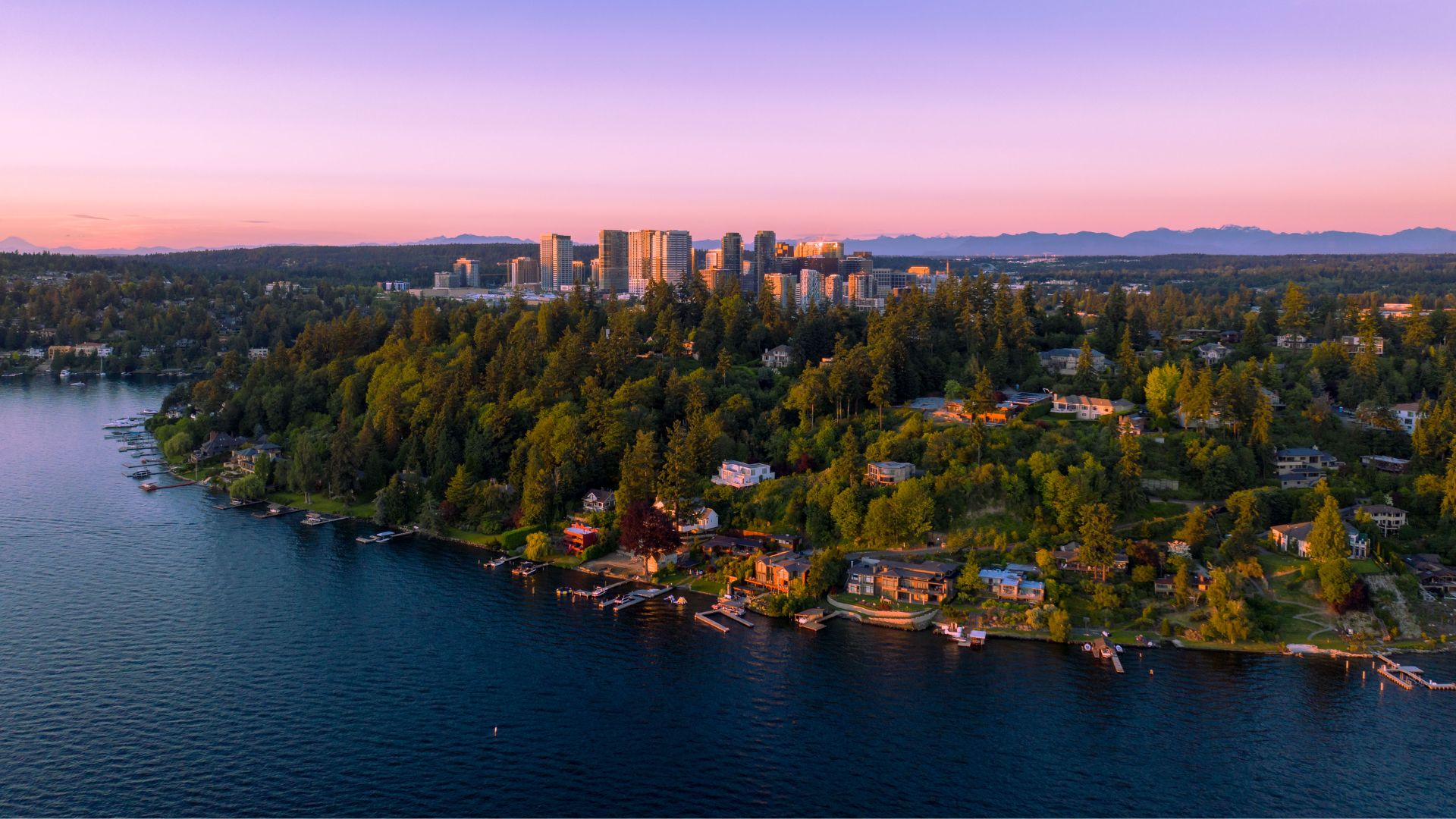
Bellevue, Washington – Bellevue is continuing to push its greenhouse gas emissions downward, even as the city grows. New data show emissions fell 4.6% between 2023 and 2024, reflecting lower overall energy use, a drop in fuel-heavy transportation and a cleaner electricity supply.
The figures come from the city’s updated Environmental Performance Dashboard, which includes the latest greenhouse gas inventory along with a tree canopy assessment and other sustainability measures. The dashboard tracks progress under the Sustainable Bellevue Plan, a long-term strategy guiding the city’s environmental goals and actions.
City officials attribute the most recent decline in emissions to several factors. Residents and businesses used less energy overall. Transportation patterns also shifted, with fewer fuel-intensive trips. At the same time, the regional electric grid grew cleaner as Puget Sound Energy increased its reliance on renewable energy sources. That combination — efficiency, transportation changes and cleaner electricity — helped drive the year-over-year improvement.
The trend stretches back more than a decade. Since 2011, greenhouse gas emissions from municipal operations have dropped by 52%. On a communitywide level, emissions are down 12% over the same period, despite steady population and job growth. When measured per person, emissions have fallen even further — a 30% decline since 2011.
City leaders have set an ambitious long-term goal: reduce communitywide greenhouse gas emissions by 95% by 2050. According to the latest data, investments in more efficient buildings, renewable energy, electric vehicles and evolving transportation habits are playing a central role in keeping Bellevue on track.
The updated dashboard also includes findings from the city’s most recent tree canopy assessment. An analysis of 2023 coverage shows a slight decrease in canopy, from 39.6% in 2021 to 39.3% in 2023. That represents a loss of roughly 70 acres of tree canopy across the city.
Most of the decline occurred in suburban residential areas. In contrast, tree canopy within city parks grew by 38 acres during the same period. Trends varied by neighborhood, underscoring how land use changes can affect the urban forest differently across the city.
Since 2020, Bellevue has partnered with the King Conservation District and PlantGeo to evaluate canopy coverage every two years. The full greenhouse gas inventory and tree canopy assessment summaries are available through the city’s Environmental Stewardship resources.
Residents will have an opportunity to learn more about these findings and the broader sustainability strategy at the upcoming Sustainable Bellevue Townhall. The event is scheduled for Monday, March 23, from 6:30 to 8 p.m. at City Hall. Community members are encouraged to attend, ask questions and share ideas about how they would like to get involved in the city’s climate and environmental efforts.
The Sustainable Bellevue Plan, updated in November, outlines the actions the city’s sustainability team is taking to meet its 2030 and 2050 targets. The latest dashboard results suggest that while challenges remain — particularly in protecting tree canopy — Bellevue continues to make measurable progress in reducing emissions and reshaping its environmental footprint for the future.


Seattle murder suspect captured in Missouri after mistaken California jail release fueled months-long manhunt

Two young men are seriously hurt after a sedan-side confrontation turns chaotic in Seattle

Long-awaited Graham Street Station faces renewed uncertainty as Seattle leaders push Sound Transit to honor decades-old promise

Seattle police search for suspect after back-to-back stabbings leave two men hospitalized in separate Rainier Valley locations

Seattle police investigate Alki Beach shooting after wounded man walks into Harborview Medical Center

Seattle City Council adopts emergency legislation pausing expansion of detention centers while officials evaluate future policy options for the city

Seattle Police investigate early morning shooting outside Pioneer Square bar after masked gunman demands inexpensive necklace and opens fire

New annual report shows Bellevue crime totals plunging from 7,828 incidents in 2024 to 5,698 in 2025 as data driven policing takes center stage

Bellevue adopts interim official control requiring new projects to reflect longstanding character of Main Street

Seattle council clears final step to launch publicly owned social housing funding

Bellevue reports another year of falling greenhouse gas emissions as cleaner Puget Sound Energy power and shifting transportation habits offset steady population and job growth

Violent disturbance at Harborview Medical Center in Seattle leads to multiple felony charges
Seattle police investigate Alki Beach shooting after wounded man walks into Harborview Medical Center
Seattle City Council adopts emergency legislation pausing expansion of detention centers while officials evaluate future policy options for the city

Seattle police credit Ballard residents for alerting officers to reckless Audi speeding along Northwest Leary Way
Long-awaited Graham Street Station faces renewed uncertainty as Seattle leaders push Sound Transit to honor decades-old promise
-

 Local News3 months ago
Nordstrom signals long-term confidence in downtown Seattle retail with store relocation at Pine Street
-
 Washington State News2 months ago
Proposal before the Washington Legislature could force homes into public view amid growing concern that closed listings distort competition and transparency
-
 Local News2 months ago
Bellevue adopts interim official control requiring new projects to reflect longstanding character of Main Street
-

 Washington State News2 months ago
Washington Attorney General announces new settlements and fresh lawsuit as multistate probe targets alleged price-fixing that drove generic drug costs far beyond normal levels